
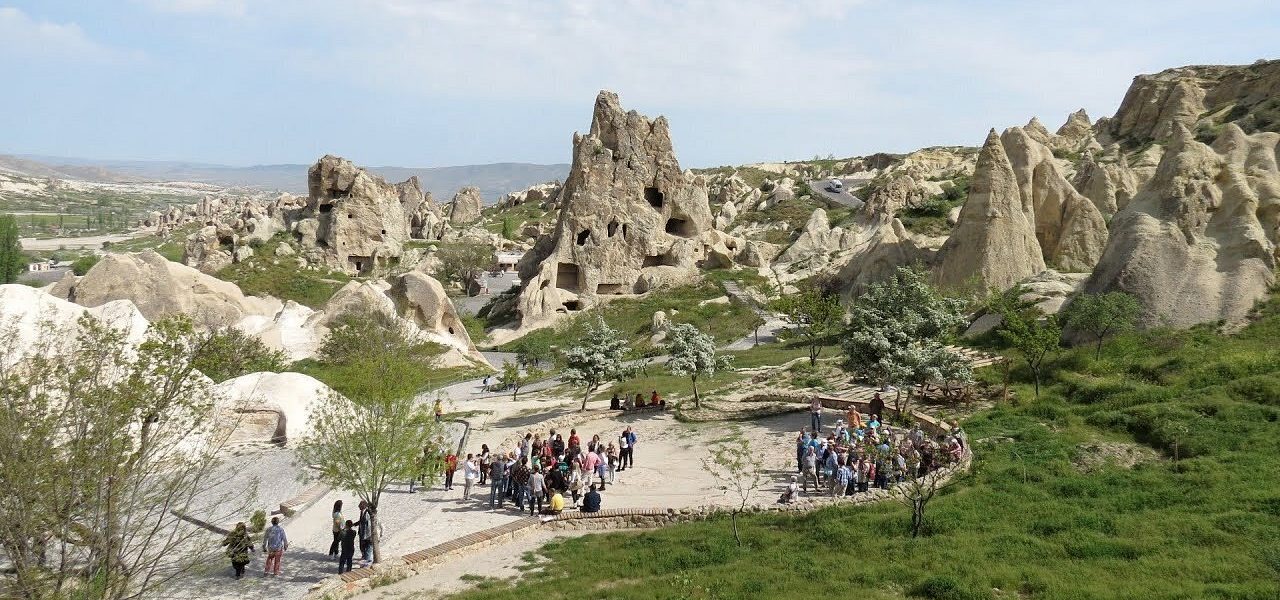
Comprehensive Visitor’s Guide to The Göreme Open Air Museum
Göreme Open Air Museum, the most famous site in Cappadocia and a jewel on the UNESCO World Heritage List. This sprawling monastic complex offers an unparalleled glimpse into the lives of early Christian hermits and communities who carved churches, refectories, and living quarters into the soft volcanic tufa rock from the 4th to the 13th centuries.
Historical and Spiritual Foundation;
The Rock-Cut Phenomenon
The unique geology of Cappadocia—soft tufa rock formed from volcanic ash—provided the perfect canvas and shelter for monastic life. The rock could be carved easily, yet it hardened over time, protecting the structures from the elements.
The museum complex was a center of early Christian teaching, largely influenced by the Cappadocian Fathers, particularly St. Basil the Great (4th century), who established communal monasticism in the region. The site served as a safe haven and a vibrant religious community for centuries, a history eloquently preserved in its painted cave churches.
Decoding the Frescoes
As you walk through the complex, pay attention to the two main styles of painting:
Red Ochre (Iconoclast Style): Simple, geometric designs (crosses, spirals, linear patterns) dating from the 8th and 9th centuries. This style reflects the period of Iconoclasm, when figurative religious imagery was temporarily banned in the Byzantine Empire.
Byzantine Murals (Figurative Frescoes): Rich, vibrant, fully plastered wall paintings (10th-13th centuries) depicting detailed scenes from the Bible, the life of Christ, and various saints. These are the main draw of the most important churches.
The Must-See Churches and Sites
The complex features over a dozen rock-cut churches and several monastic structures. While all are significant, here are the essential stops for a complete experience:
1. The Dark Church
The indisputable highlight of the museum, this church requires a separate entrance ticket for preservation purposes.
Significance: Its modern name comes from its singular, tiny window, which greatly limited natural light. This lack of light, however, is precisely why its 11th-century frescoes are the best-preserved and most vibrant in all of Cappadocia.
Must-See Details: Look for the detailed depictions of the Deesis (Christ enthroned with Mary and John the Baptist), the Last Supper, and the Crucifixion, all in stunning detail and color.
2. The Buckle Church
Located just outside the main gate, this is the largest and arguably the oldest surviving rock church in the Göreme Valley.
Significance: It is actually four chapels merged into one complex. It’s famed for its extensive and detailed narrative fresco cycle, predominantly depicting the Life of Christ in a scroll-like, continuous narrative on its barrel-vaulted ceiling.
Must-See Details: The use of the rich lapis lazuli blue on the ceiling vaults is unlike any other church in the complex, representing the transition to a sophisticated Byzantine style.
3. The Nunnery
This multi-story rock-cut complex offers a view into the communal lives of the resident nuns.
Significance: While only the first three stories are accessible, you can climb through corridors to see the refectory (dining hall), kitchens, and rock-cut rooms that served as living quarters.
Must-See Details: Imagine the daily life of the community in this vertical, fortress-like structure.
4. The Snake Church
Named for its famous depiction, this church has a long, low ceiling, resembling a chapel carved into a single tufa pinnacle.
Significance: Its name comes from the fresco of St. George and St. Theodore slaying the Dragon (mistaken for a snake by locals).
Must-See Details: Look for the portraits of other prominent saints, including St. Onuphrius, depicted as a naked, long-bearded hermit.
5. The Apple Church
This small, cross-in-square plan church is noted for its well-preserved, high-quality frescoes.
Significance: Despite its smaller size, it features one of the most complete cycles of New Testament scenes, including a striking depiction of the Last Supper where Judas is clearly identifiable.
Essential Visitor Guide and Itinerary for Goreme Open Air Museum
Getting There
The Museum is located about 1.5 kilometers (a 20-minute uphill walk) from the center of Göreme town. Alternatively, you can take a local taxi, or, most commonly, arrive as part of a North Cappadocia Tour itinerary.
Recommended Itinerary (2-3 Hours)
To avoid the crowds and the midday heat, it is highly recommended to start your visit as close to the opening time as possible (or visit in the late afternoon).
Start at the Gate: Visit the Tokalı Church (Buckle Church) first, as it is just outside the main entry point and is often less crowded initially.
Inside the Main Complex: Proceed through the main complex, visiting the St. Basil Chapel and the Nunnery.
The Core: Prioritize the three best-preserved churches: Dark Church (plan extra time here), Apple Church, and Snake Church.
Finish: Conclude with the Sandal Church (Çarıklı Kilise) and the Refectory/Kitchens.
Etiquette and Comfort Tips
Footwear: The paths within the museum are uneven, slippery, and involve many stairs. Wear sturdy, comfortable walking shoes.
Sun Protection: The museum is outdoors. Bring a hat, sunglasses, and high-SPF sunscreen, especially during the spring and summer months.
Photography: Flash photography is strictly forbidden in all churches to protect the fragile frescoes. In many of the most popular churches, all photography is prohibited. Please respect these rules.
Hydration: Carry water with you. The central part of the day can be very hot and dry.
Explore Cappadocia Seamlessly
To fully appreciate the Göreme Open Air Museum and the other wonders of the region, the best approach is through an organized package.
We specialize in curated guided and regular small group tours (maximum 15 persons) that include the North Cappadocia route (where the museum is located) as part of comprehensive 2-day or 3-day Cappadocia tour packages departing directly from Istanbul.
Our packages ensure you have a professional local guide to illuminate the history and art of the churches, comfortable transportation, and a perfectly paced itinerary covering all the major highlights like the valleys, fairy chimneys, and pottery towns.
To view detailed itineraries, included services, and secure your place on one of our premium, small-group cappadocia tours from Istanbul
| Question | Answer from Your Guide |
| How long does it take to visit the museum? | Most visitors need 2 to 3 hours to fully explore the churches, chapels, and monastic complexes, including time to appreciate the detailed frescoes. |
| Is the Göreme Open Air Museum worth visiting? | Absolutely. It is the crown jewel of Cappadocia and a mandatory stop. As a UNESCO World Heritage site, it preserves the finest and most numerous examples of Byzantine rock-cut art and architecture in the region. |
| Is the Dark Church worth the separate ticket? | Yes. The Dark Church houses the most remarkably vivid and best-preserved frescoes in all of Cappadocia, due to its minimal light exposure over the centuries. It is an essential stop for art and history enthusiasts. |
| What is the best time to visit to avoid crowds? | The best strategy is to visit early in the morning right at opening time, or late in the afternoon (at least 2 hours before closing) to avoid the peak hours of the tour buses. |
| What should I wear for my visit? | There is no strict dress code, but since the site contains sacred spaces, modest clothing is recommended and appreciated. Comfortable, sturdy shoes are essential for navigating the uneven, rocky paths. |
| Can I walk from Göreme town to the museum? | Yes. The museum is a scenic 15–20 minute walk (about 1.5 km) uphill from the center of Göreme town. Taxis are also readily available. |

